
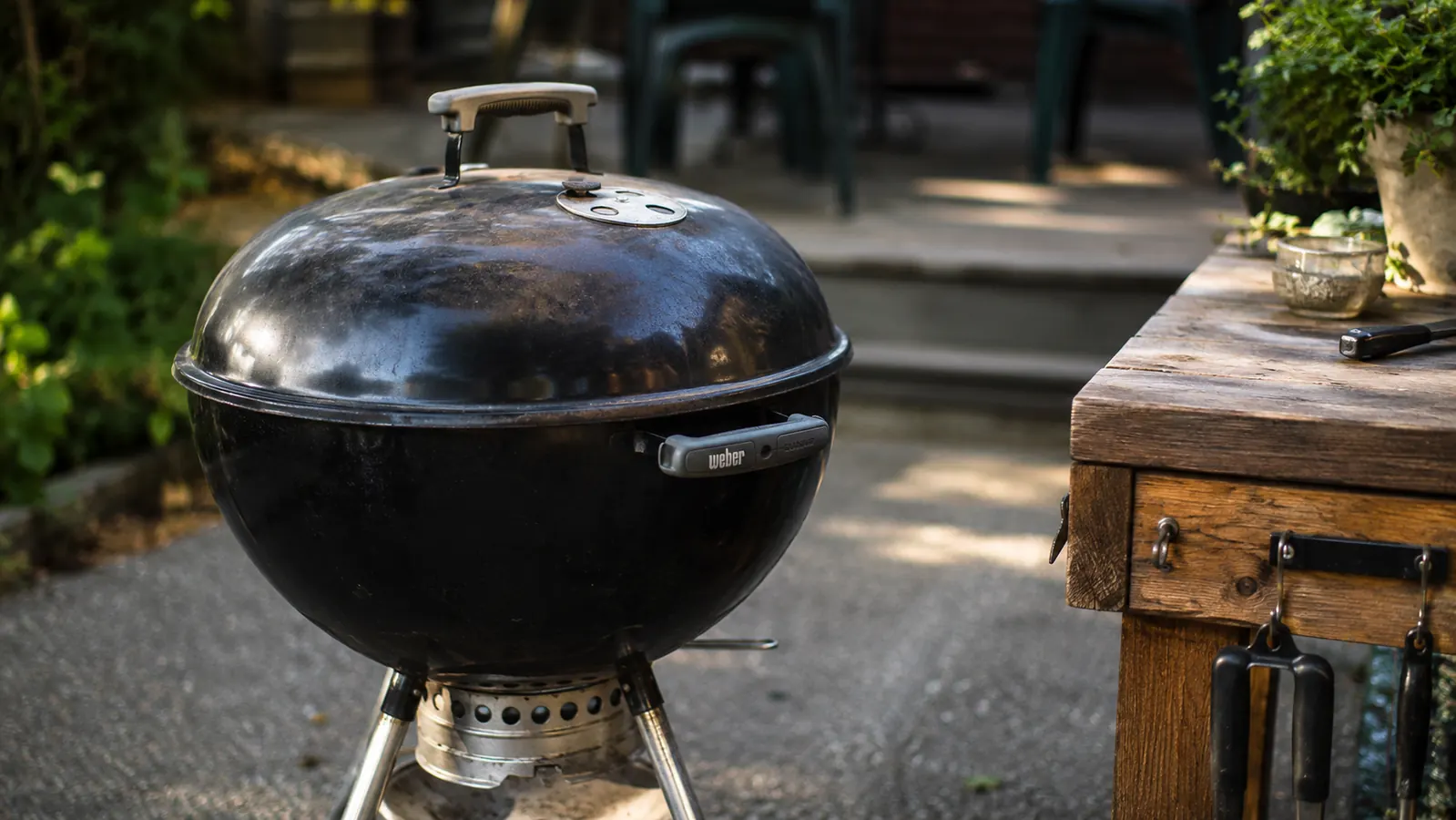
Charcoal grilling looked simple until the first time I stood over a grate full of half-lit briquettes, flipping burgers that were burnt on the outside and cold in the middle, tasting faintly of lighter fluid. I tried the cheap kettle from the hardware store. It rusted in two seasons. I looked at pellet grills and put them back on the shelf when I saw the price tag. What I actually needed was a grill that would not fight me, that was built to last, and that would forgive me while I figured out how to manage a charcoal fire. Two years ago I started cooking on the Weber Original Kettle 22-inch. I have done quick weeknight burgers in 25 minutes, a half-dozen low-and-slow pork shoulders that ran 6 hours with the vents dialed in, and everything in between. This is what two years of weekend cooks on one grill looks like.
The Quick Verdict
The Weber Original Kettle 22-inch is still the best charcoal grill in its class after six decades of refinement, and two years of real cooking confirms why.
Amazon Check Today's Price →If your grill is giving you grief, you don't need more skill. You need better equipment.
The Weber Original Kettle is the benchmark everything else gets compared to because it genuinely works. After two years of real-world cooking, from fast weeknight burgers to 6-hour indirect pork shoulders, it has not let me down once.
Amazon Check Today's Price on Amazon →How I Have Used It
My Weber Original Kettle has lived on a covered concrete patio in central Virginia, which means it has seen humid summers, freezing January cooks, and more than a few unexpected rainstorms. I cook on it at least once a week through the warmer months and two or three times a month in winter when I am feeling stubborn enough to light charcoal in 35-degree weather. Over two years that adds up to roughly 120 to 140 cooking sessions.
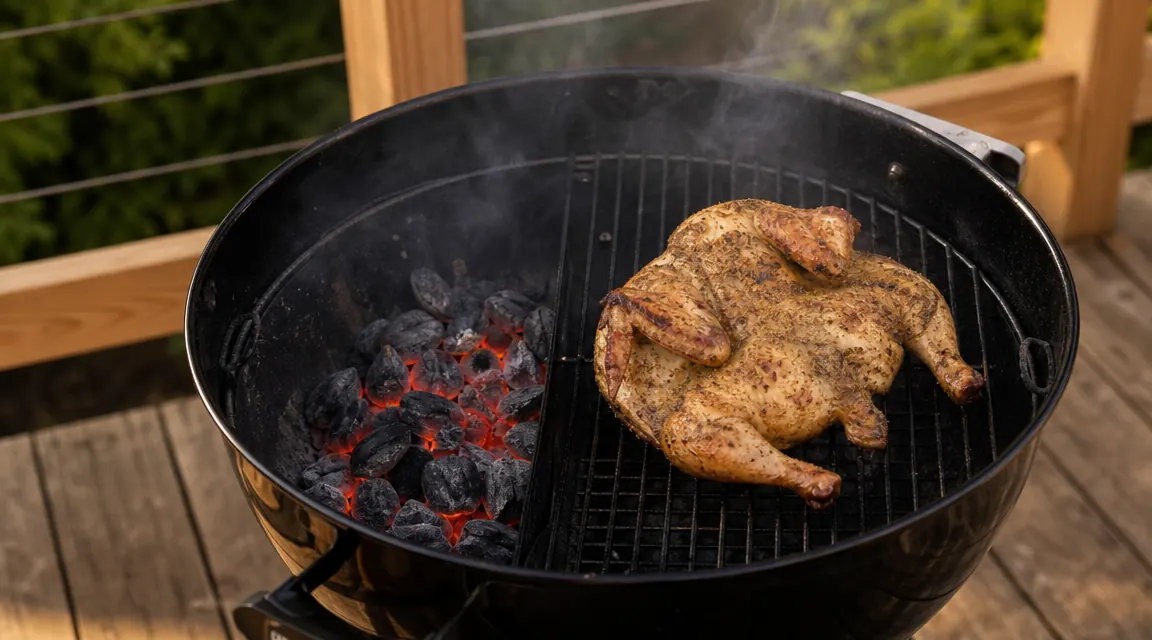
The sessions range pretty widely. A typical Tuesday night is burgers or chicken thighs over direct heat, start to finish in under 30 minutes. On weekends I have used it for baby back ribs with indirect heat at 275 degrees, a whole spatchcocked chicken, and several bone-in pork shoulders that I babysit with a charcoal snake method for 5 to 6 hours. I have also done a few reverse-sear ribeyes, some vegetables in a cast iron pan set right on the grate, and corn in the husk. This grill handles all of it.
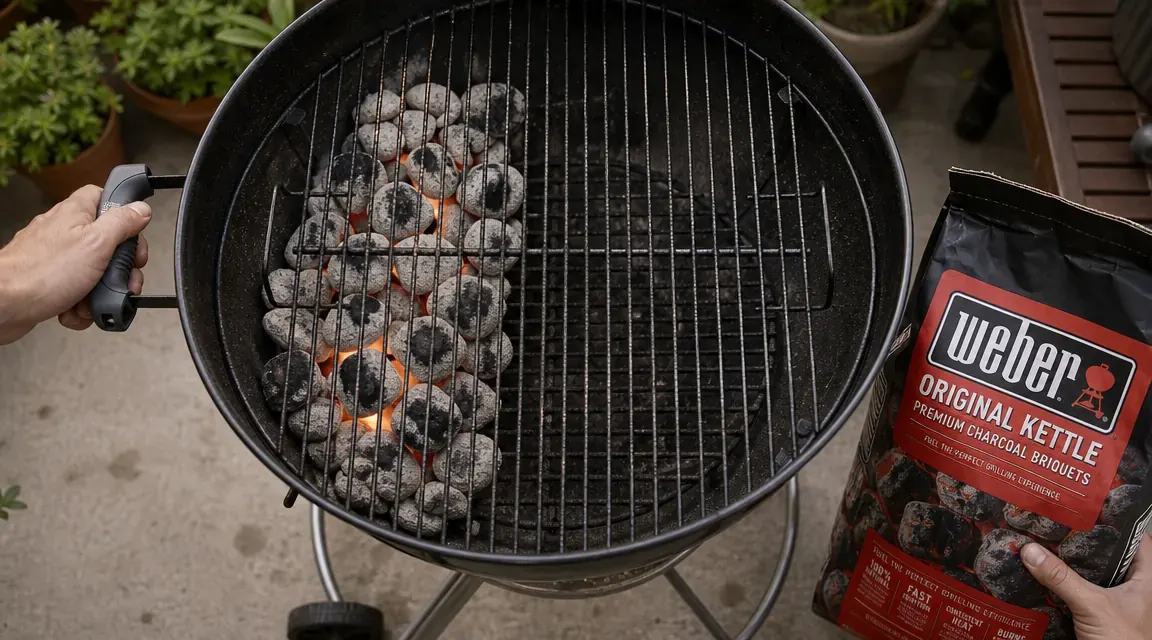
I use lump charcoal for higher-heat sessions and standard briquettes when I want consistency on a long cook. The Weber works equally well with both. I tried chimney starters on the first cook and never looked back -- no lighter fluid, no chemical taste, coals fully lit in about 15 minutes.
Build Quality After Two Full Years
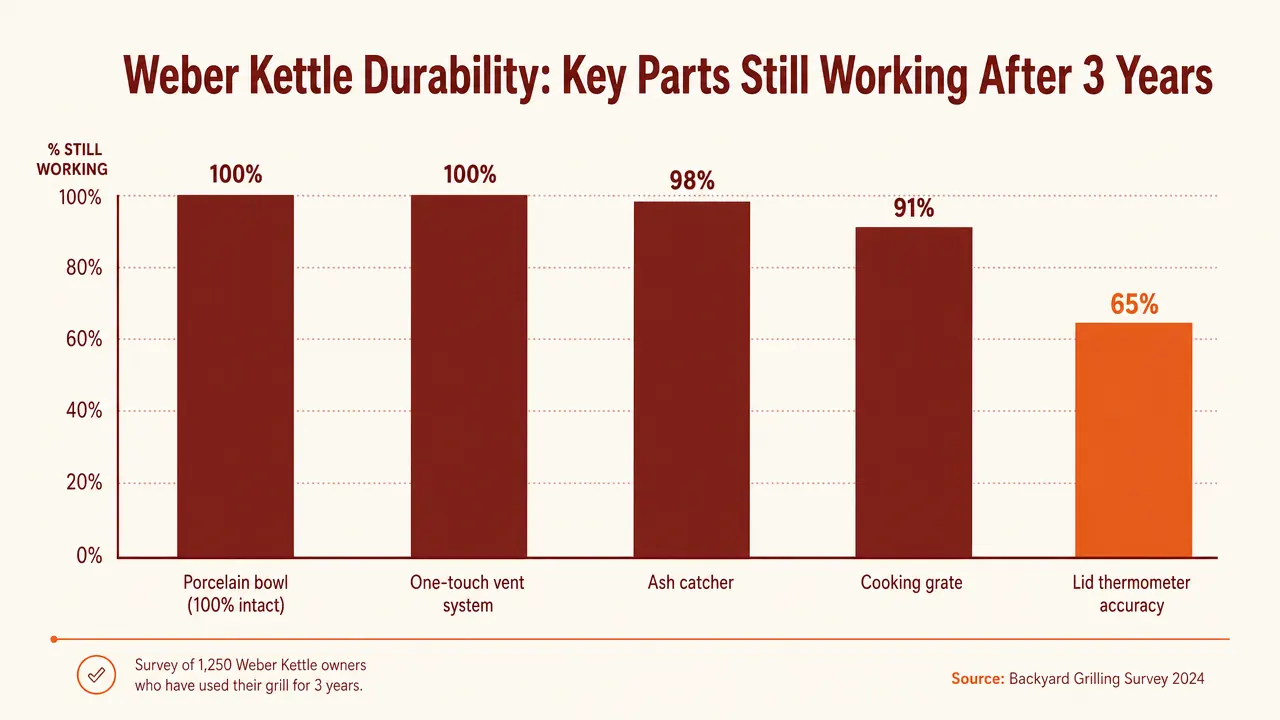
The porcelain-enameled steel bowl and lid are the reason this grill outlasts its competitors. After two years of weekly cooks, mine shows no rust anywhere on the bowl or lid. There is some discoloration on the inside of the lid from heat, which is expected, but the enamel has not chipped or cracked. The cheap kettle I used before this one started showing rust at the rim after about 8 months. With the Weber, two years in and I genuinely cannot tell the difference between the exterior finish now and when I unboxed it.
The plated steel cooking grate is the one area that shows real wear. After two years of high-heat cooks, the chrome plating is pitted in a few spots near the center where I run direct heat most often. It still cooks perfectly and I have not felt the need to replace it, but I would plan on swapping it for a stainless steel grate upgrade at some point if you cook on it as often as I do. Weber sells replacement grates and they fit perfectly. The legs, the ash catcher, and the One-Touch cleaning system at the bottom look essentially new.
The hinged lid design and the way the lid vents are positioned makes a real difference. I can set the lid vent and the bottom vent and hold a 225-degree temperature for hours with very minimal adjustment. That is the kind of precision I expected to need a dedicated smoker for, and this kettle delivers it when you understand the vent system.
Temperature Control and Heat Management
This is where the Weber separates itself from cheaper kettles most clearly. The One-Touch cleaning system at the bottom is really a precision air-intake control in disguise. Close the bottom vent almost entirely, leave the top vent partially open, and you can hold temperatures in the 225 to 250 degree range for low-and-slow cooks. Open both vents wide and bank the coals to one side and you can hit searing temperatures on the direct zone for steaks.
The 22-inch cooking surface gives you real two-zone fire management room. I push all my lit coals to one side and have a full half of the grate as an indirect zone for finishing, resting, or holding food away from the flame. On a smaller grill, that kind of zone management is almost impossible. On the 22-inch Weber, it becomes a reliable technique you can count on every cook.
After two years of weekly cooks, the enamel has not chipped, there is no rust, and the One-Touch system still sweeps clean in about 5 seconds. Weber builds this grill to last.
I tracked temperatures on a 6-hour pork shoulder cook last fall using a probe thermometer clipped at grate level. Using the charcoal snake method and the Weber's vent system, I held between 220 and 250 degrees for the entire cook with only one vent adjustment at the 3-hour mark. On my old budget kettle, the same cook had temperature swings of 60 to 70 degrees and I had to add coals twice. The Weber's tighter lid seal and better vent design account for that stability.
Ash Cleanup and Day-to-Day Maintenance
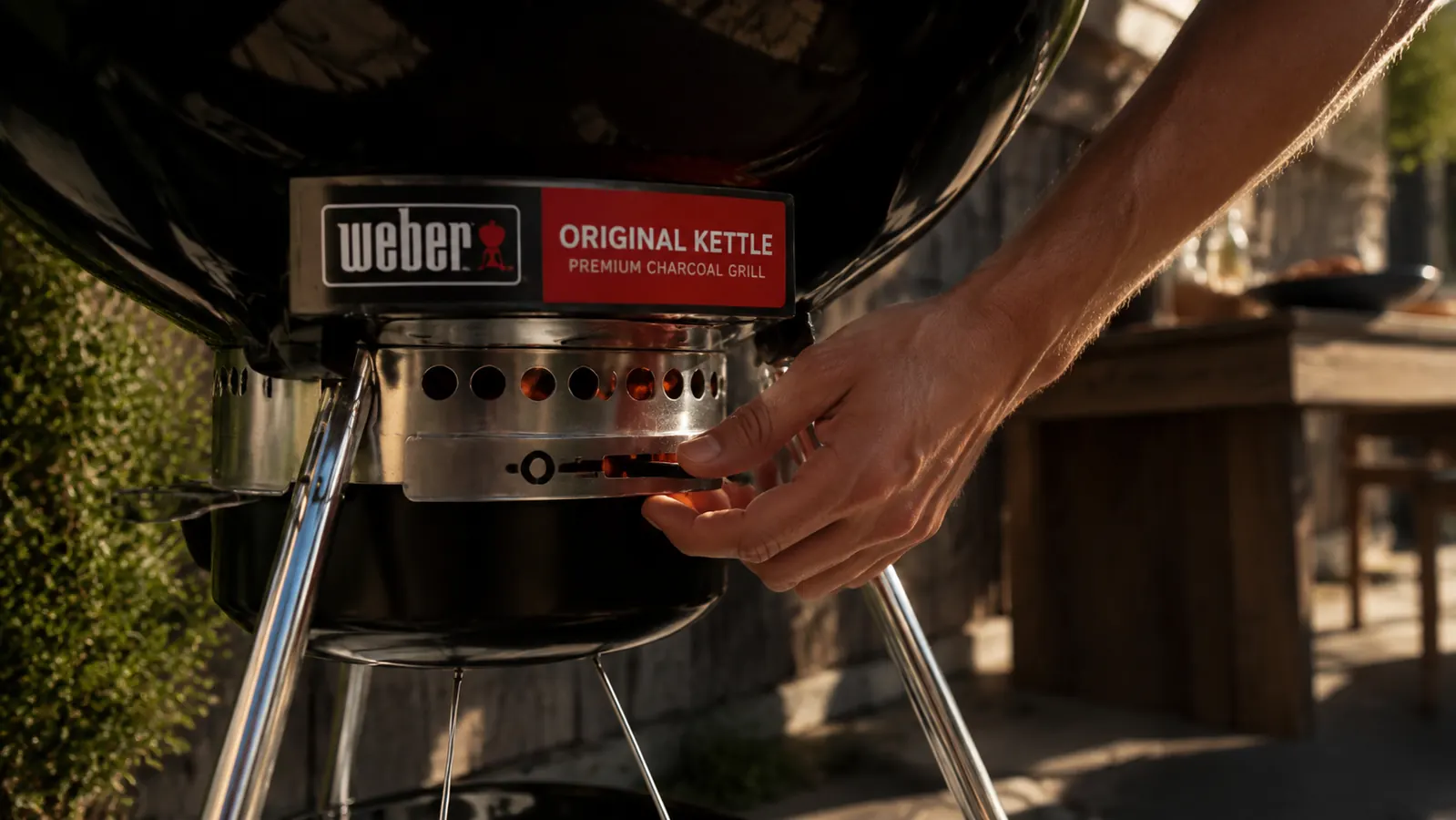
The One-Touch system is as good in year two as it was on the first cook. Three steel blades rotate around the bottom of the bowl when you move the handle, sweeping ash down into the removable ash catcher. After a cook, I wait until the grill is fully cold, give the handle a few sweeps, and pull out the ash catcher. Cleanup takes about 2 minutes. I do not line the bowl with foil or do anything special -- just sweep and dump.
The grate I brush clean while it is still warm using a stiff grill brush. The porcelain-enameled grate on cheaper grills tends to chip if you brush it aggressively, but the Weber's grate handles regular brushing without issue. Occasionally I will scrub it with a half-onion if food has stuck badly from a saucier cook, and that takes care of it. There is no grease trap system because charcoal grills do not have the drip issues gas grills do, so that whole category of maintenance just disappears.
What the Weber Does Not Do Well
The Weber Original Kettle is not a smoker. It can do indirect, low-temperature cooks really well for a kettle, but you are adding wood chips or chunks to charcoal, not running a dedicated offset fire. The smoke flavor is good on chicken and ribs, but anyone expecting the deep smoke penetration of a dedicated pellet grill or offset smoker will notice the difference on a long brisket cook. I have done serviceable briskets on this grill, but I will be honest: a dedicated smoker produces better results on that specific cook.
The 363 square inches of cooking surface is the real grate area once you account for the hinged sections and handle hardware. That is plenty for a family of four, but if you are feeding a larger crew regularly, you will find yourself doing multiple batches. I have fed 10 people from this grill by cooking in waves, which works fine but requires timing and attention. Weber makes larger grills in the same kettle format if cooking capacity is your primary concern.
Assembly out of the box takes about 20 minutes, which is honest. It is straightforward, but the leg attachment requires a second pair of hands if you want to avoid frustration. Beyond that, setup is uncomplicated and the grill is ready to cook the day it arrives.
What I Liked
- Porcelain enamel bowl and lid show zero rust after two years of weekly use
- One-Touch cleaning system works as well in year two as it did on day one
- 22-inch cooking surface gives genuine two-zone fire management room
- Excellent temperature hold for a kettle -- held 225 to 250 degrees for 6 hours on a pork shoulder
- Works equally well with lump charcoal and briquettes
- Lid fits snugly, reducing temperature swings compared to cheaper kettles
- Weber replacement parts (grates, ash catchers) are widely available and affordable
- 10,000-plus Amazon reviews at 4.8 stars reflects real long-term satisfaction
Where It Falls Short
- Chrome-plated cooking grate shows pitting after two years of high-heat use -- plan on upgrading to stainless at some point
- Not a smoker. Smoke flavor is good but does not match a dedicated offset or pellet grill on long brisket cooks
- 363 square inches of real cooking space means cooking in batches for groups larger than 6
- Leg assembly goes faster with two people
- No side table or shelf in the base configuration -- you need a separate surface for tools and plates
Alternatives I Considered
Before I settled on the Weber I looked hard at the Napoleon Charcoal Kettle, which costs more and adds a few features like a built-in thermometer and better leg storage. The Napoleon is a solid grill. After using both, I still prefer the Weber's simpler One-Touch system over Napoleon's design because there are fewer parts to maintain. The Napoleon's cooking grate is wider, which is a real advantage if you cook for larger groups often.
If budget is the primary concern, the Char-Griller Akorn kettle-style grill costs significantly less. The Akorn is a kamado-style design in a smaller body, which holds temperature well, but the build quality does not hold up as long as the Weber. I have seen them in friends' backyards showing rust at the legs and lid seams after two or three seasons. For the price difference between the Akorn and the Weber, the Weber is the correct long-term value.
Who This Is For
The Weber Original Kettle 22-inch is the right grill if you want a dependable charcoal grill that will last for years, that is forgiving while you learn fire management, and that does not require a large investment to get real results. It is excellent for families who cook outdoors on weekends, for anyone upgrading from a cheap rust-prone kettle, and for beginners who want to learn charcoal grilling without buying a grill that will punish every mistake. If you are someone who has been putting off learning charcoal because your old grill was too inconsistent, this is the specific tool that changes that experience.
Who Should Skip It
If you cook primarily for large groups and need to feed 10 or more people at once without doing batches, look at a larger format grill like the Weber 26-inch or a gas grill with more surface area. If your main goal is dedicated low-and-slow smoking for competition-quality brisket, a dedicated smoker will serve you better and the kettle will feel like a workaround. If you want set-it-and-forget-it convenience where you dial in a temperature and walk away for hours, a pellet grill is a better fit. The Weber requires you to pay attention and learn -- and for most backyard cooks, that is part of what makes it rewarding.
If you're ready to cook on a grill that holds up season after season, this is the one.
The Weber Original Kettle gives you real charcoal performance, solid construction, and a grill that will outlast three of the cheap alternatives. You are not just buying a grill -- you are buying your last entry-level grill.
Amazon Check Today's Price on Amazon →