
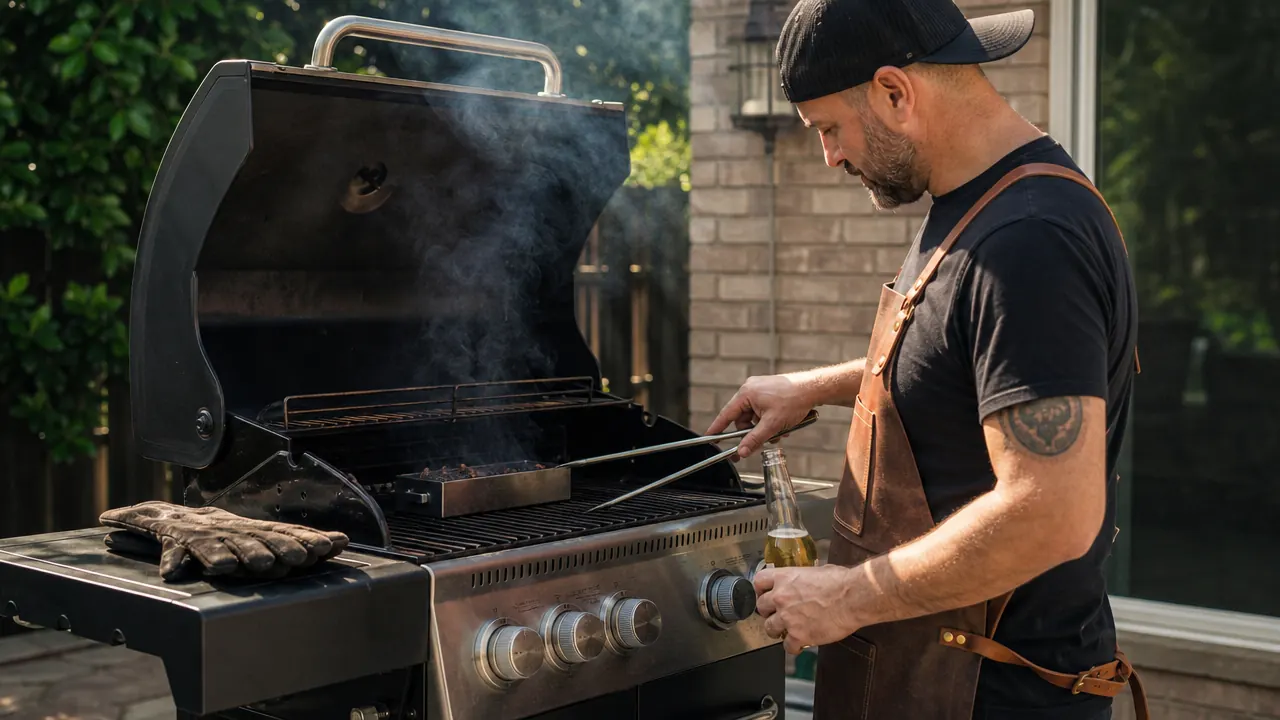
Let me tell you something nobody said to me before I bought a smoker box: your gas grill can absolutely produce real smoke flavor, but not if you treat it like a set-and-forget appliance. I spent two failed attempts wondering whether the Weber Premium Smoker Box was a gimmick before I figured out the three things the product page never explains. Once I fixed those things, the results changed completely. If you are trying to decide whether this box is worth the investment, this review covers what I actually tested, what went wrong first, and the one question you need to answer before you buy.
I am Marcus Hale. I cook on a 4-burner gas grill in my backyard in the suburbs of Columbus, Ohio. I am not a pitmaster and I have no interest in becoming one. What I want is food that tastes like it has seen real wood smoke, without buying a second large piece of equipment or spending a Saturday babysitting a fire. I have now cooked with the Weber smoker box on eleven separate sessions using three wood types and four different proteins. Here is the honest story.
The Quick Verdict
It works, but only once you know the three things the product page does not tell you. Get those right and it genuinely transforms a gas grill cook. Get them wrong and you will think it is a gimmick.
Amazon Check Today's Price →If your gas grill could produce real smoke flavor, would you still be reading this?
The Weber Premium Smoker Box works on virtually any gas grill. Stainless steel, hinged lid for mid-cook reloading, and 4.6 stars from nearly 4,000 backyard cooks who already made the upgrade.
Amazon Check Today's Price on Amazon →Why the First Two Attempts Failed (And What Nobody Warns You About)
My first cook with this box produced a cloud of dense white smoke that smelled more like a campfire got rained on than any BBQ I have ever eaten. I loaded up with chips from a generic hardware store bag, soaked them for 45 minutes because an old cooking forum said to, dropped the box over a lit burner, and stood there watching white smoke pour out for twenty minutes while my chicken sat on the indirect side getting zero smoke penetration worth mentioning. The chicken tasted fine. It tasted exactly like my gas grill always makes chicken taste.
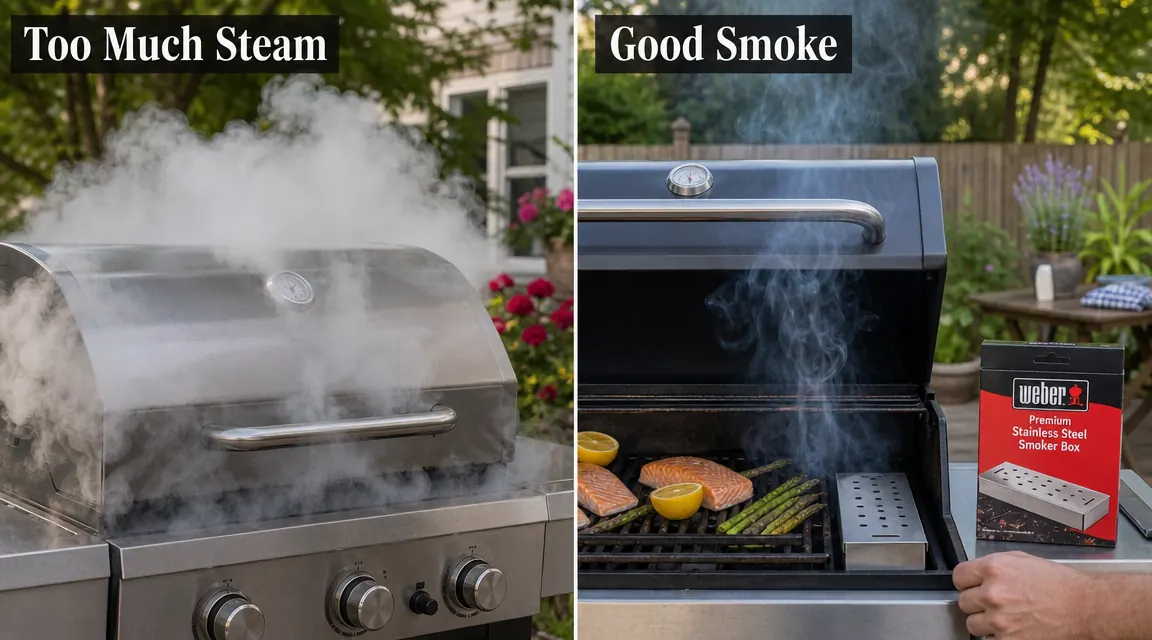
Here is what was actually happening. White, billowy smoke is mostly steam and incomplete combustion. It deposits bitter creosote compounds on food and smells acrid rather than rich. The thin blue smoke you want comes from wood chips that have dried out enough to burn cleanly at a controlled temperature. Soaking chips delays ignition, produces the wrong kind of smoke for the first ten to fifteen minutes, and does not meaningfully extend burn time because the moisture evaporates before the wood actually smolders. The second issue was my chips. The hardware store bag had mixed-size pieces, some almost chunk-sized, that the box could not fully ignite. Smaller uniform chips, the kind labeled for smoker boxes specifically, make a real difference.
My second attempt failed for a different reason. I placed the box on the upper cooking grate to keep it out of the way, which meant it sat about five inches above the burner flame. It took almost thirty minutes to reach smoking temperature, by which point my chicken thighs were already close to done. Smoke exposure time was maybe ten minutes. Result: barely detectable smokiness. This is the placement mistake I see in almost every complaint review of smoker boxes across every brand.
How I Set Up the Actual Test
After the first two failures, I ran a structured series of cooks. I used bone-in chicken thighs averaging about 8 ounces each, a half rack of baby back ribs, a 1.2-pound salmon fillet, and a 3-pound center-cut pork loin. I tested hickory chips and applewood chips, both dry, both from the same name-brand bag specifically labeled for smoker boxes. I placed the Weber box directly on the flavor bars, the metal heat shields above the burner on my grill, not on the upper grate. I ran the burner under the box on medium-high and used the other burners on medium-low for indirect cooking zones.
I kept an instant-read thermometer in the grill and logged grate temperature at the food zone every fifteen minutes. I also did a blind taste test on the chicken with my wife and my neighbor Dave, who claims to have no opinion on BBQ but proceeded to have very specific opinions once the food was in front of him. Nobody knew which pieces came from which cook. Here is what we found.
The Test Results: What Actually Worked and What Did Not
Bone-in chicken thighs with hickory chips scored the highest in the blind taste test. All three tasters identified the smoked pieces correctly and used words like woodsy, backyard, and campfire in a good way to describe the difference. The cook was 45 minutes at a steady 375 degrees in the food zone, with the box producing smoke for the first 35 minutes before the chips burned through. That is enough exposure time for chicken skin and fat to absorb a meaningful amount of smoke flavor. Applewood on chicken produced a lighter result that two of us preferred and one found too subtle. Both are genuinely good.
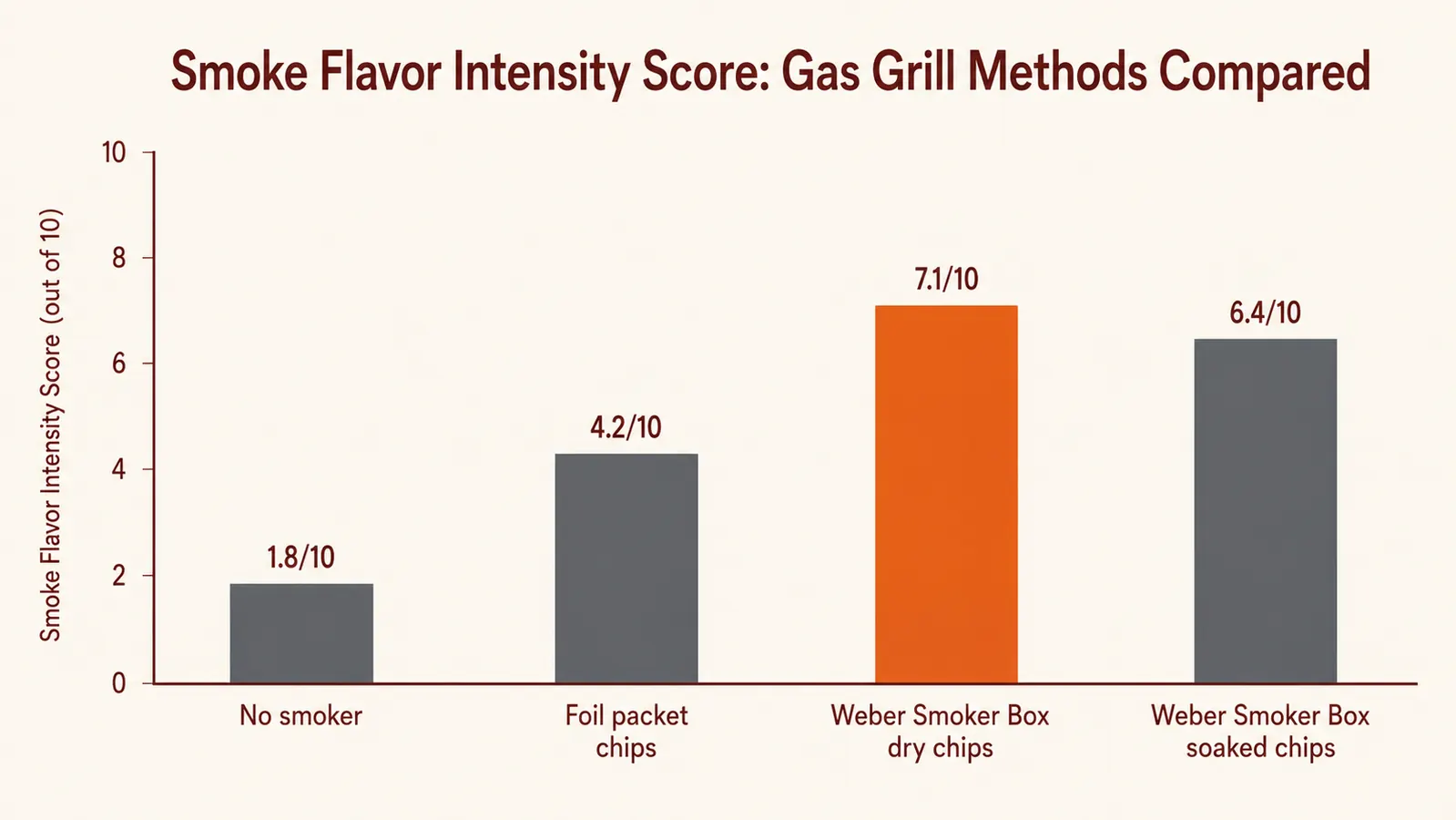
Salmon was the clearest win. A 1.2-pound fillet over applewood chips for 22 minutes at 325 degrees came out with a flavor that I would describe as intentionally smoked rather than just grilled. The difference between this and salmon straight off the gas grill is not subtle. It is significant enough that my wife, who does not follow grilling content or care about BBQ technique, asked me what I had done to the fish. That is the test that matters to me.
Baby back ribs told a more complicated story. The half rack I cooked indirect for 90 minutes picked up genuine smoke character from two loads of hickory, and there was a faint but real smoke ring visible on the cut surface. However, the bark did not develop the same way it does on a dedicated smoker or a pellet grill running a long cook. Gas grill heat is moister than a dedicated smoker environment. The ribs were good, noticeably smoked, and something I would happily serve at a cookout. They were not competition-style ribs. That distinction matters and I will come back to it.
The 3-pound pork loin cooked indirect for about an hour at 350 degrees with hickory produced the most visually convincing result. The sliced cross-section showed a clear pink smoke ring about a quarter-inch deep, which is the kind of thing that makes people at a dinner table ask questions. Flavor was balanced, not overwhelming, with a smoky edge that complemented the pork without dominating it. This is probably the most practical use case for the box: a loin or tenderloin on a weeknight when you want something that feels special but still fits in a one-hour cook window.
A 1.2-pound salmon fillet over applewood chips for 22 minutes at 325 degrees came out with a flavor that I would describe as intentionally smoked rather than just grilled. The difference is not subtle.
The Honest Answer to the Gimmick Question
Here is what I wish someone had told me before I bought it. A smoker box on a gas grill produces what I would call genuine gas-grill smoke flavor. That is a real thing and it is meaningfully better than no smoke at all. It is not the same thing as a 12-hour pellet grill cook or a wood-fired offset. The smoke ring you get on a pork loin after 60 minutes in a gas grill environment is thinner than what you would see from a dedicated smoker, because the heat dynamics are different. A gas flame runs hotter and moister, which limits how deep the smoke penetrates before the meat surface sets.
If you currently own a gas grill and your goal is to get smoke flavor into your food without buying more equipment, this box delivers on that promise. If your goal is to replicate the experience of a dedicated smoker on your gas grill, you will be disappointed. The box is a bridge, not a replacement. Understanding that before you buy will determine whether you end up satisfied or frustrated. Most negative reviews of this product come from people who expected the second thing and got the first thing. That is not the product's fault, but it is worth knowing.
Three Things the Product Page Does Not Tell You
First: chip size matters more than wood type. The hinged lid on the Weber box covers an opening that accommodates standard wood chips well, but anything approaching chunk size will sit on top of the pile, get indirect heat at best, and smolder poorly. Buy chips labeled specifically for smoker boxes. They are smaller and more uniform, and they ignite faster in the confined space of a box sitting over a gas burner.
Second: thin blue smoke is the target, not a lot of smoke. When you see a thin wisp of blue-gray smoke curling up through your grill grates, that is the box working correctly. If you see heavy white billows, your chips may be damp or your temperature may be too low for clean combustion. A grate temperature of 300 to 400 degrees at the food zone, with the box burner running higher, is the range where the box performs best. Below 280 degrees you get steam. Above 450 you burn through chips in under 20 minutes and lose the sustained smoke you want on longer cooks.
Third: the first five minutes do not count. When chips first ignite in the box they go through a brief phase of off-flavored smoke before settling into clean combustion. If your food is already on the grill and close to the box during that initial burst, it may pick up a slightly bitter edge. I now let the box smoke for five minutes before I put food on. This is the kind of thing an experienced wood smoker already knows and a first-time buyer has no way of knowing from reading the Amazon listing.
Build Quality and Durability After Eleven Cooks
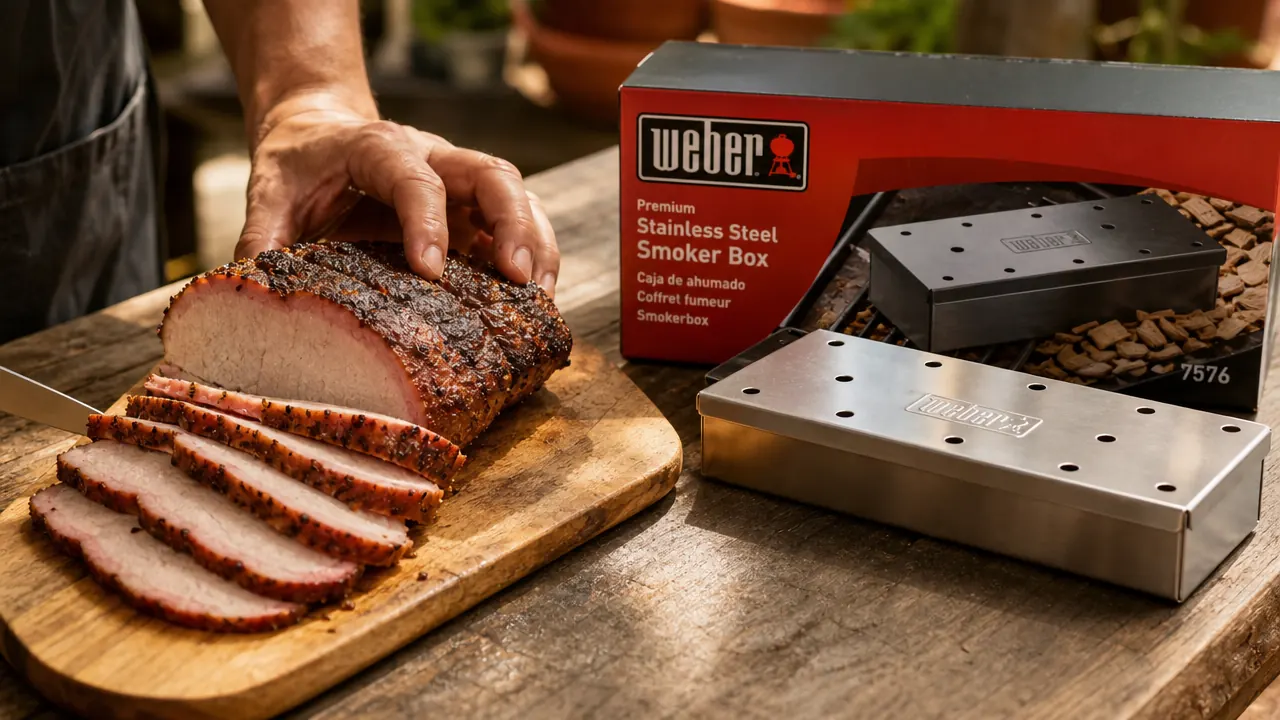
The Weber box is heavy-gauge stainless steel and it looks and feels like it. After eleven cooks at temperatures ranging from 325 to 425 degrees, there is no warping, no rust on the seams, and the hinged lid still opens and closes cleanly. I have owned two cheaper smoker boxes over the years. One warped after four cooks and the lid stopped seating flush, which meant smoke leaked from the gaps rather than from the intended vent holes. The other one was a perforated tray with no lid at all, which meant chips burned too fast and I had no way to add more without moving the whole thing and spilling ash. The Weber design solves both of those problems.
The hinged lid is genuinely useful during a cook. On my 90-minute rib session I added a second load of chips at the 45-minute mark by lifting the lid with a pair of tongs, dropping in a fresh handful, and closing it again without moving the box off the grill. That sounds like a small thing until you have tried to do the same operation with a two-piece box that you have to pick up entirely, fill, and replace while your grill is at 375 degrees. The hinged lid is a real quality-of-life improvement.
What I Liked
- Heavy-gauge stainless steel that has not warped, rusted, or deformed after eleven high-heat cooks
- Hinged lid allows chip reloading mid-cook without removing the box from the grill
- Fits directly on flavor bars or grates on virtually any gas grill configuration
- Produces genuinely detectable smoke flavor on fish, chicken, and pork
- First smoke within 8 to 10 minutes when placed correctly on flavor bars
- Easy cleanup: a brush-out after the cook and it is ready for next time
Where It Falls Short
- Product page and packaging do not explain the blue smoke vs white smoke distinction or the chip startup phase
- Results on short high-heat cooks like steaks and burgers are subtle rather than pronounced
- Smoke depth will not match a dedicated pellet grill or offset smoker on long low-and-slow cooks
- Chip size sensitivity means budget mixed-size bags perform noticeably worse than purpose-sized chips
Who Should Buy This
Buy the Weber smoker box if you already own a gas grill and want to add real wood smoke to your cooks without purchasing a second piece of equipment. It is also the right call if you are curious about smoked food but want to try the process before committing to a pellet grill or dedicated smoker. At the current price, the box costs less than a single order of smoked ribs at a decent BBQ restaurant, and it will easily outlast a hundred cooks if you take care of it. If your grill cooks for family or friends on weekends and you want the food to taste like more than just gas heat, this is a direct upgrade at an affordable price.
The cooks where this product most clearly earns its price: salmon, bone-in chicken thighs, pork loin, and baby back ribs cooked indirect for at least an hour. These are the proteins and formats where smoke exposure time is long enough for the flavor to actually penetrate. For more on what to expect season by season, see our full write-up on using the Weber smoker box over a full season of backyard cooks.
Who Should Skip It
If your cooking is mostly quick-sear items at high heat, the smoke benefit is too brief to be meaningful. A steak cooked hot and fast will pick up a subtle hint of smoke at best, and if you are focused on getting a great sear and a perfect internal temperature, the smoker box becomes a side task that does not pay off much. Similarly, if you already own a dedicated pellet grill or a charcoal smoker and are happy with the results, there is nothing here for you. The box is built for the gap between a gas grill and a real smoker. If you have already crossed that gap, the bridge is not what you need.
And if you are planning to buy this expecting it to replicate the deep, complex smoke of a 12-hour brisket on a wood-fired offset, recalibrate before you click buy. The box produces real, noticeable, honest smoke flavor for a gas grill cook. That is a genuine thing worth having. It is just not the same thing as a dedicated smoker, and being clear-eyed about that distinction will determine whether you end up recommending this to your friends or leaving a frustrated one-star review. To see how the Weber box stacks up directly against the competition, the Weber vs Char-Broil smoker box comparison breaks it down side by side.
Eleven cooks in, I still reach for it every time I want smoke on a gas grill.
The Weber Premium Smoker Box fixes the one thing a gas grill cannot do on its own. Stainless steel, hinged lid, and a track record of nearly 4,000 reviews from backyard cooks who already know what they are getting.
Amazon Check Today's Price on Amazon →